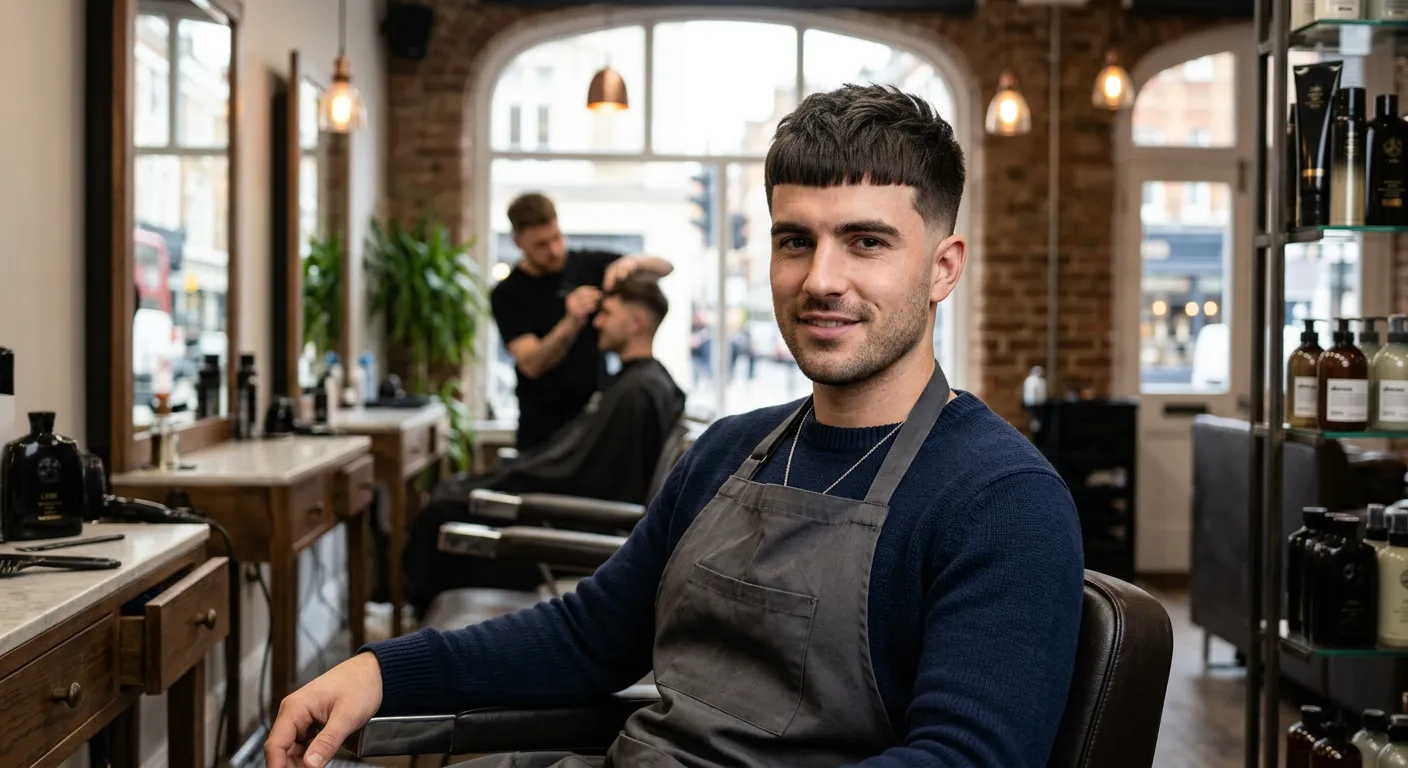
Undercut Haircut: The Bold Style That Works Every Way
The undercut features shaved sides with longer hair on top for a bold, versatile look. Learn how to ask for it, style it, and find your ideal undercut variation.
The undercut is one of the most versatile and impactful haircuts you can get. Shaved or closely cropped sides with dramatically longer hair on top -- that contrast is what makes it instantly recognizable and endlessly customizable. Whether you slick the top back, let it flop forward, or style it into a textured mess, the undercut gives you a framework that adapts to almost any look you're going for.
What Is an Undercut?
An undercut creates a clear disconnect between the short sides and the longer top. Unlike a fade, which gradually blends short into long, the undercut has a defined line where the length changes abruptly. The sides and back are usually clipped to one consistent short length -- anywhere from a zero guard to a number three -- while the top can range from a few inches to well past the chin. That stark contrast is the whole point. It creates visual drama and draws attention upward, making the top section the focal point of the entire style.
Who Does the Undercut Suit?
The undercut works for both men and women and across a wide range of face shapes, which is part of why it's stayed popular for so long. Strong jawlines and angular features look naturally at home with the sharp contrast. Oval faces can handle any undercut variation. Round faces benefit from the way the close-cropped sides slim the silhouette, especially when combined with some height or volume on top. For square faces, a slightly longer, textured top softens the angularity. Thick hair is ideal because the top has plenty to work with, but fine hair can also look great -- you just need to choose your styling approach carefully to maximize volume.
Variations and Ideas
The disconnected undercut keeps that hard line between top and sides for maximum drama. A tapered undercut blends things just slightly at the transition for a softer take. An undercut with a slicked-back top is the classic, refined version -- think Peaky Blinders. Pair it with a textured crop on top for something more casual and modern. Women's undercuts often feature a shaved section hidden underneath longer hair that's revealed when the hair is up or tucked behind the ear -- subtle but edgy. You can also go asymmetrical, keeping one side longer for a dramatic sweep. Designs shaved into the short sections add another dimension of personalization.
How to Ask Your Barber
Be specific about the length on the sides and how disconnected you want the transition. "I want a number two on the sides with no blend into the top" gets you a classic undercut. If you want some blending, say so -- it changes the look significantly. Discuss how much length you're keeping on top and how you plan to style it, because that affects how the barber shapes things. If this is your first undercut, bring photos of two or three looks you like so your barber can see the range you're comfortable with. Ask about your hair's growth patterns too -- cowlicks and natural parts affect how the disconnection looks as it grows out.
Styling Your Undercut
The top is your canvas. For a slicked-back look, work pomade through damp hair and comb it straight back -- a blow dryer set to medium heat locks in the direction. For textured, messy styling, a matte clay or paste worked through towel-dried hair gives you grip and definition without shine. A side-swept undercut just needs you to blow-dry the top in the direction you want it to fall, then set with a light-hold product. If you're growing the top longer, a sea salt spray gives you that effortless wave texture. The sides need no styling whatsoever, which is part of the undercut's appeal -- half your head is maintenance-free.
Maintenance and Grow-Out
The sides need touching up every two to three weeks to keep the disconnection sharp and defined. The top can go longer between cuts depending on how fast it grows and how much length you want. Growing out an undercut is the one real downside -- the sides go through an awkward phase where they're too long to look shaved but too short to blend. Your barber can help manage this by gradually lengthening the sides over several cuts while keeping the top in check. Expect the full grow-out to take three to four months before everything looks cohesive again. In the meantime, hats and headbands are your friends.