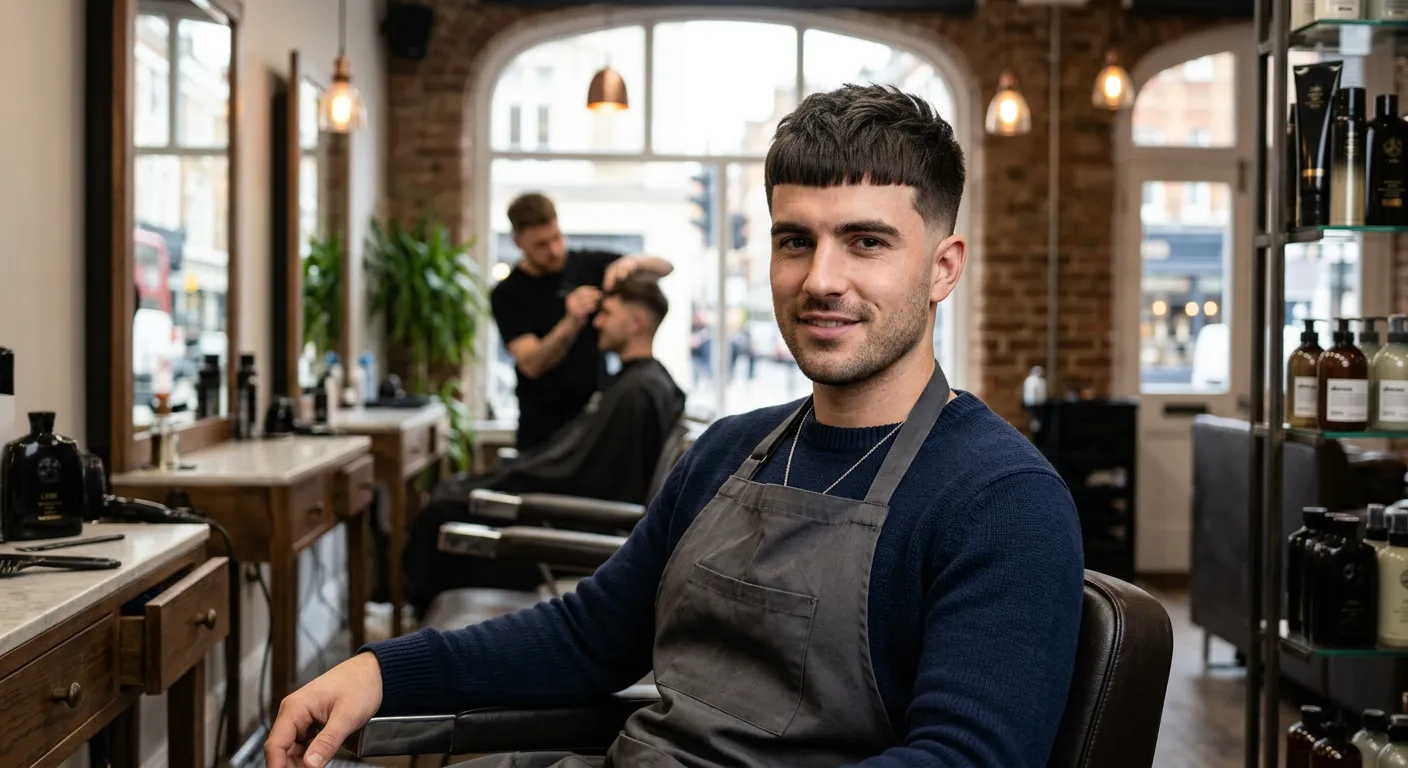
The Crew Cut: A No-Nonsense Guide to This Classic Haircut
The crew cut is a clean, no-fuss classic. Learn about variations, what clipper lengths to ask for, who it suits, and how to style it with minimal effort.
The crew cut is one of those haircuts that never goes out of style because it never tries to be anything it's not. Short on the sides, slightly longer on top, tapered cleanly at the back and temples. It's the haircut that's been trusted by military men, Ivy League students, and Hollywood actors for over a century, and it still looks as sharp today as it ever did. If you want a cut that takes two minutes to style and looks good on everyone from athletes to executives, this is it.
What Is a Crew Cut?
A crew cut keeps the hair on top between half an inch and about an inch and a half long, with the sides and back tapered progressively shorter. The hair on top is usually longest at the front hairline and gradually shortens toward the crown, creating a subtle graduated effect. The sides are typically cut with a #1 to #3 clipper guard, tapering into the skin or a close trim at the ears and neckline. What separates a crew cut from a buzz cut is that graduated length on top. A buzz cut is uniform all over; a crew cut has enough length on top for a slight style, even if that style is just pushing it forward or to one side.
Who Does a Crew Cut Suit?
Almost everyone. That's not a throwaway answer. The crew cut is one of the most universally flattering haircuts because its proportions are inherently balanced. Oval and square face shapes look particularly strong with a crew cut, but round faces benefit from keeping a little extra length on top to add height. If you have a receding hairline, a crew cut can actually work in your favor by embracing the short length rather than fighting it, though you may want to keep the top shorter to minimize the contrast. Men with strong facial features, defined jawlines, or well-shaped heads especially suit this cut since there's nothing to hide behind.
Variations and Ideas
The classic crew cut is just the starting point. A textured crew cut adds some choppy, piece-y movement on top using a matte clay, giving it a more modern, relaxed feel. A longer crew cut pushes the top length to an inch and a half or even two inches, which allows for more styling options like a small quiff or a side part. A crew cut with a fade replaces the traditional taper on the sides with a skin fade for a sharper, more contemporary contrast. An Ivy League crew cut is a slightly longer version where the top is long enough to part to the side, bridging the gap between a crew cut and a classic side part. Each variation keeps the same clean, functional spirit of the original.
How to Ask Your Barber
Keep it simple. Tell your barber you want a crew cut and specify two things: how long you want the top, and how short you want the sides. Something like "crew cut, about an inch on top, #2 on the sides with a taper" gives them a clear picture. If you want a fade instead of a taper, say so. Mention whether you want the hairline blocked (straight across) or tapered (natural and blended). If you're going for a longer crew cut, say "Ivy League length on top" so they know you want enough to part or style. A photo always helps, but the crew cut is standard enough that most barbers can nail it from a verbal description alone.
Styling and Maintenance
This is where the crew cut really shines. Daily styling takes about 30 seconds: work a small amount of matte paste, light pomade, or wax between your palms and run it through the top, pushing slightly forward and to one side. That's it. For an even simpler look, skip the product entirely and just towel-dry after a shower. The crew cut looks great either way. Maintenance means a trip to the barber every three to four weeks. Because the cut is short, growth shows quickly, and what was a crisp crew cut starts looking like an awkward in-between length around the five-week mark. Keeping up with trims is the one commitment this haircut asks of you.