

The Mullet Haircut: Your Guide to Rocking the Modern Mullet
The mullet has gone from punchline to power move. What was once dismissed as a relic of the 1980s is now one of the most requested styles in barbershops worldwide, worn by everyone from professional athletes to rock stars to your coolest coworker. The secret? Today's mullet is nothing like your dad's version — it's textured, intentional, and endlessly customizable.

What Makes a Mullet a Mullet
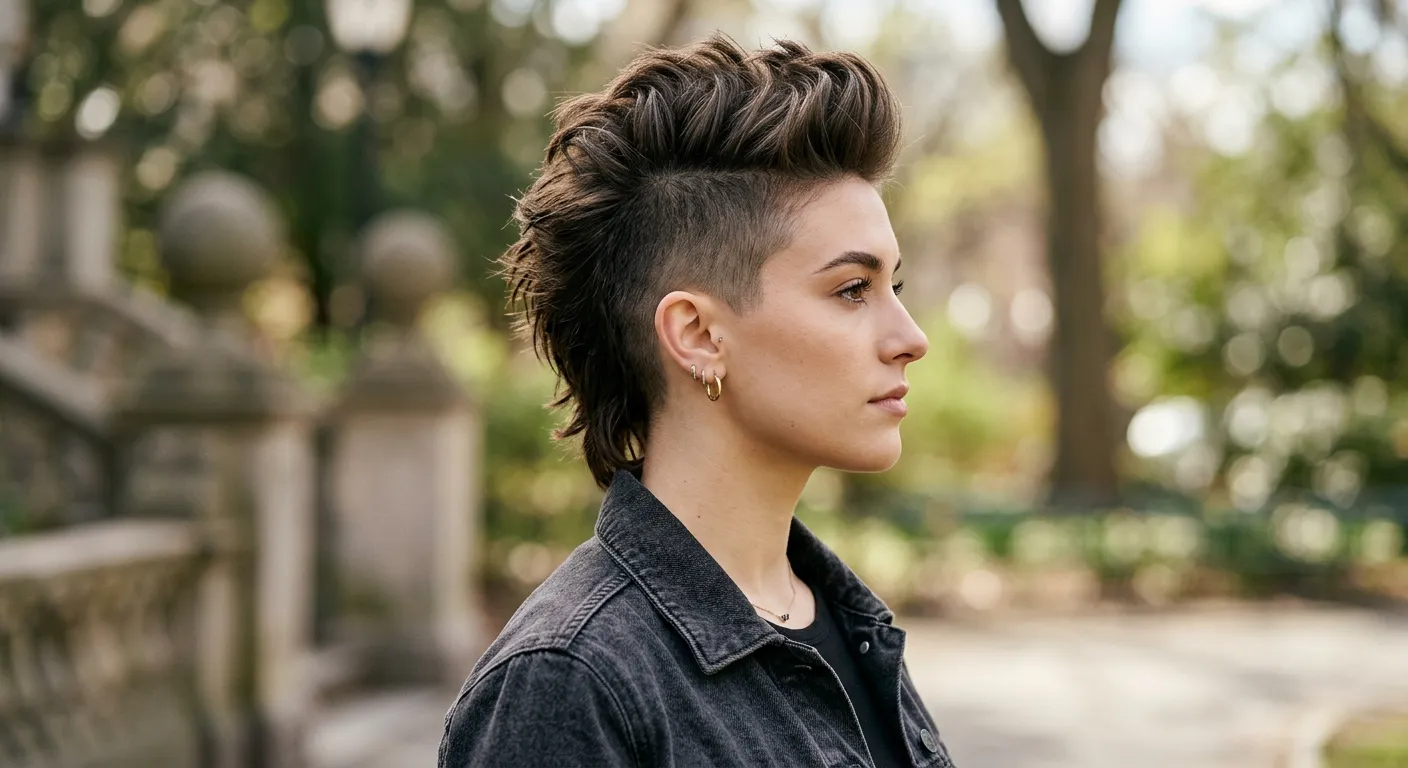
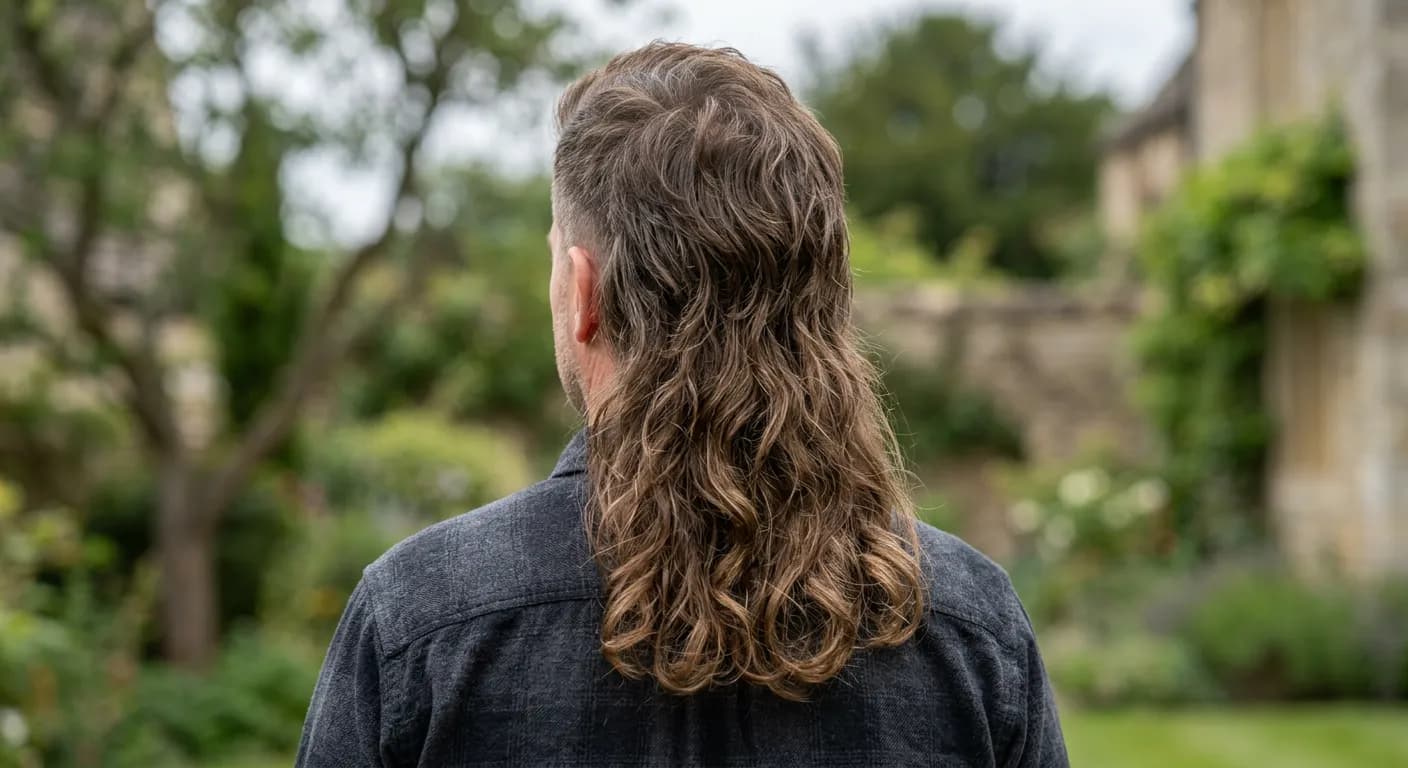
At its core, the mullet follows one simple rule: shorter in the front and sides, longer in the back. But that description barely scratches the surface. A well-cut modern mullet relies on layering to create a seamless flow from the cropped top into the longer tail. The transition zone — where the short meets the long around the crown and temples — is where a skilled barber earns their money. Unlike a shag, which layers evenly all around, the mullet creates deliberate contrast. The front can be anything from a textured crop to a swept-back fringe, while the back ranges from a subtle tail to a dramatic curtain hitting the shoulders.


Who Does the Mullet Suit
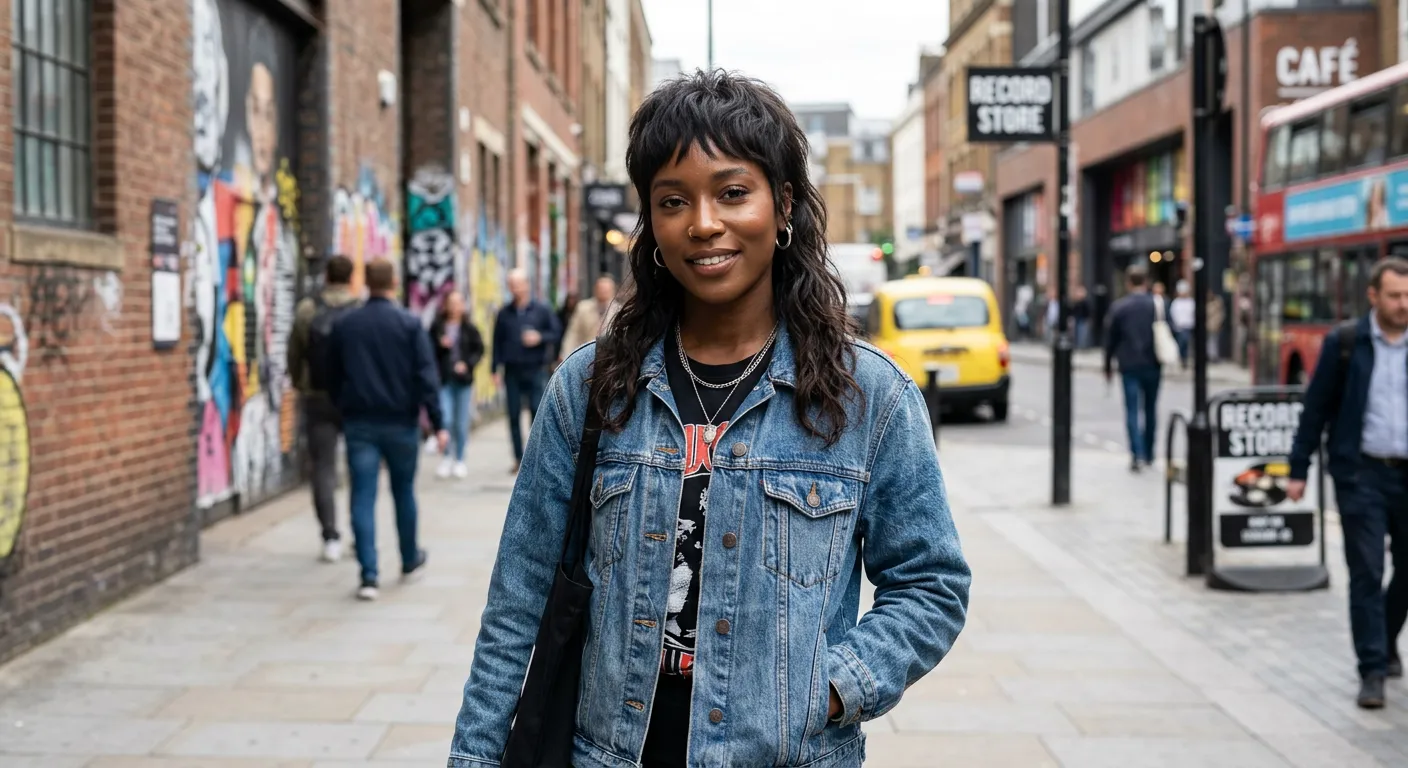
The mullet works on more face shapes than you'd think. Oval and diamond faces have the easiest time, since the width on top and length in back naturally balances their proportions. Square jaws look great with a softer, more layered mullet that avoids harsh lines. If you've got a round face, go for extra height on top and keep the sides tight to add length to your profile. Hair texture matters too — wavy and curly hair give a mullet instant personality and volume, while straight hair delivers that clean, sharp contrast between sections. Thicker hair holds the shape best, but finer hair can absolutely pull it off with the right layering and a bit of texturizing product.

Mullet Haircut Men
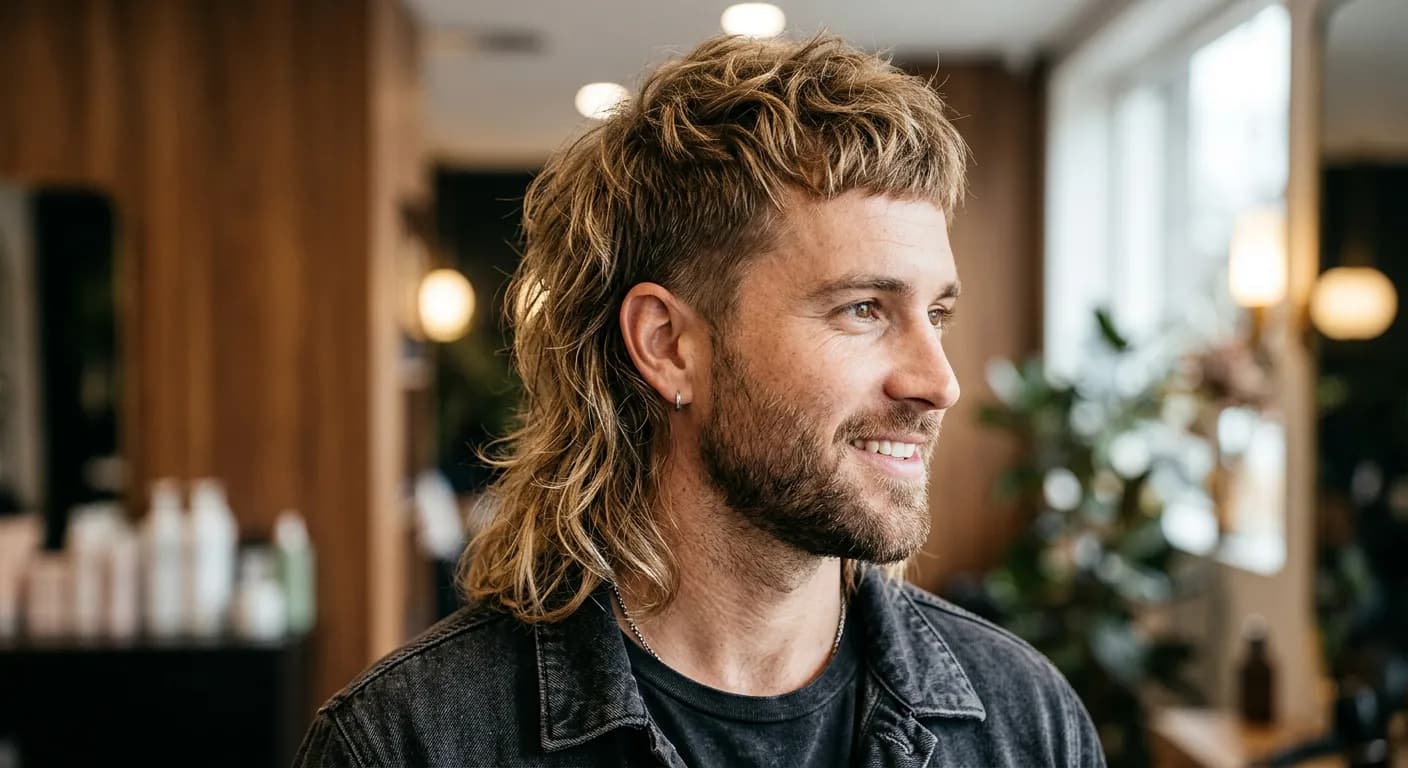
The men's mullet scene right now is all about controlled chaos. The most popular version keeps the top around 3 to 4 inches with choppy layers, blended sides, and a back that extends 2 to 3 inches past the collar. You'll see it paired with facial hair constantly — a mullet with a well-groomed beard creates a rugged-yet-put-together look that's hard to beat. For guys in professional settings, a subtler mullet with a gentle taper on the sides and modest back length reads more intentional than wild. Athletes and creatives tend to push it further with disconnected tops and longer, flowing tails. The beauty of the men's mullet is that you set the dial between refined and rebellious.

Mullet Fade Haircut
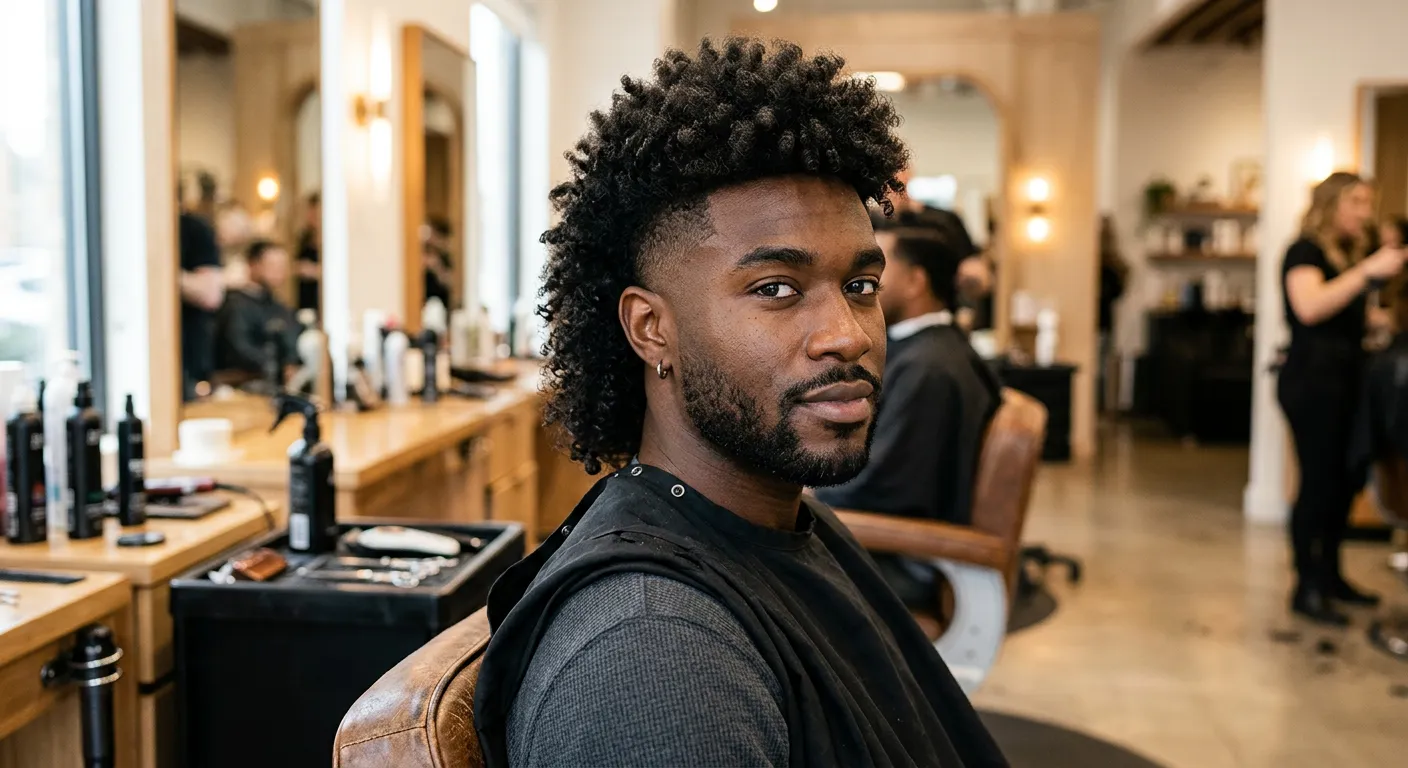
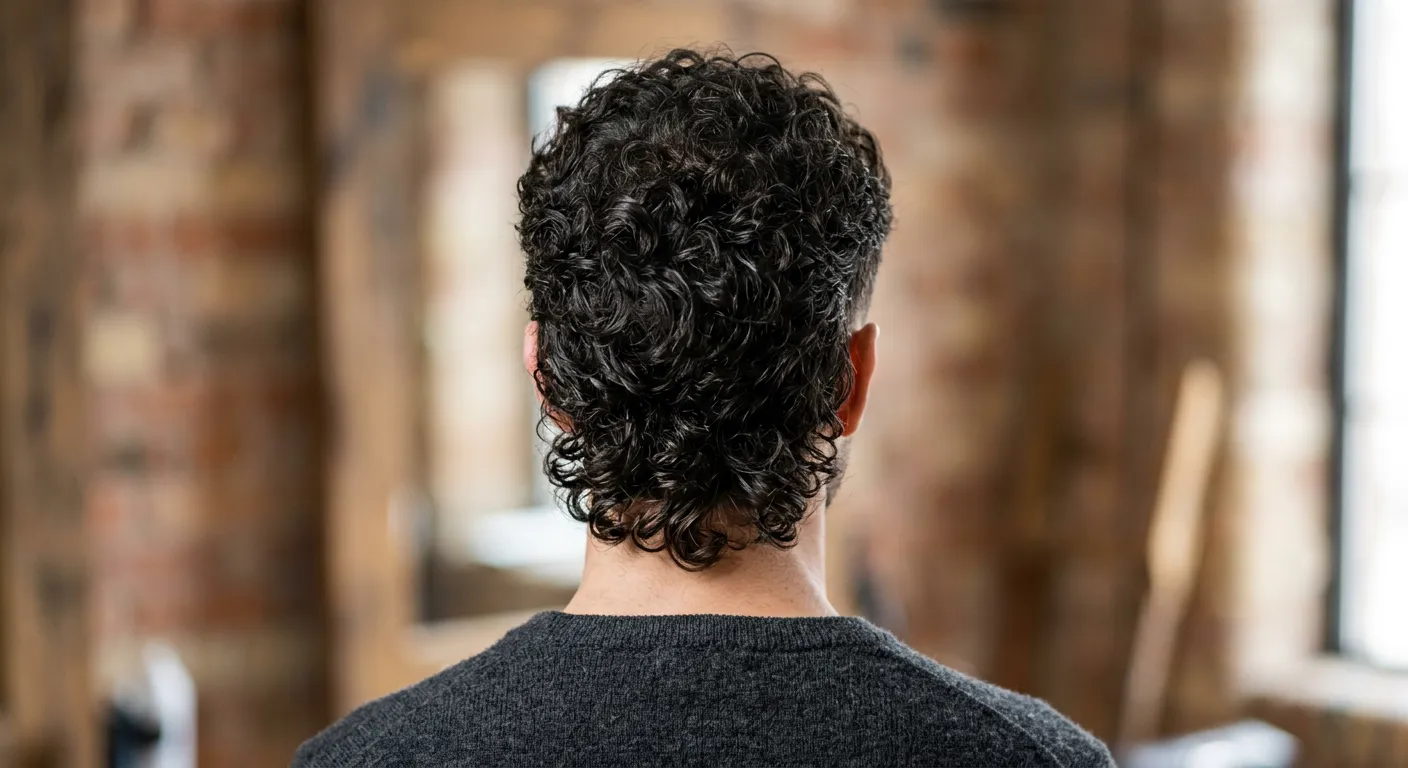
Pairing a mullet with a fade is arguably the best thing to happen to this hairstyle. The fade cleans up the sides and back edges, giving the mullet a polished framework while the textured top and longer back provide all the character. A low fade keeps things subtle and works well for everyday wear. A mid fade adds more contrast and highlights the top section. A high fade makes a serious statement — the dramatic skin-to-length transition turns heads instantly. The fade also makes growing out or adjusting your mullet much easier, since your barber can adjust the fade level while leaving the top and back length untouched.


Fade Mullet Haircut
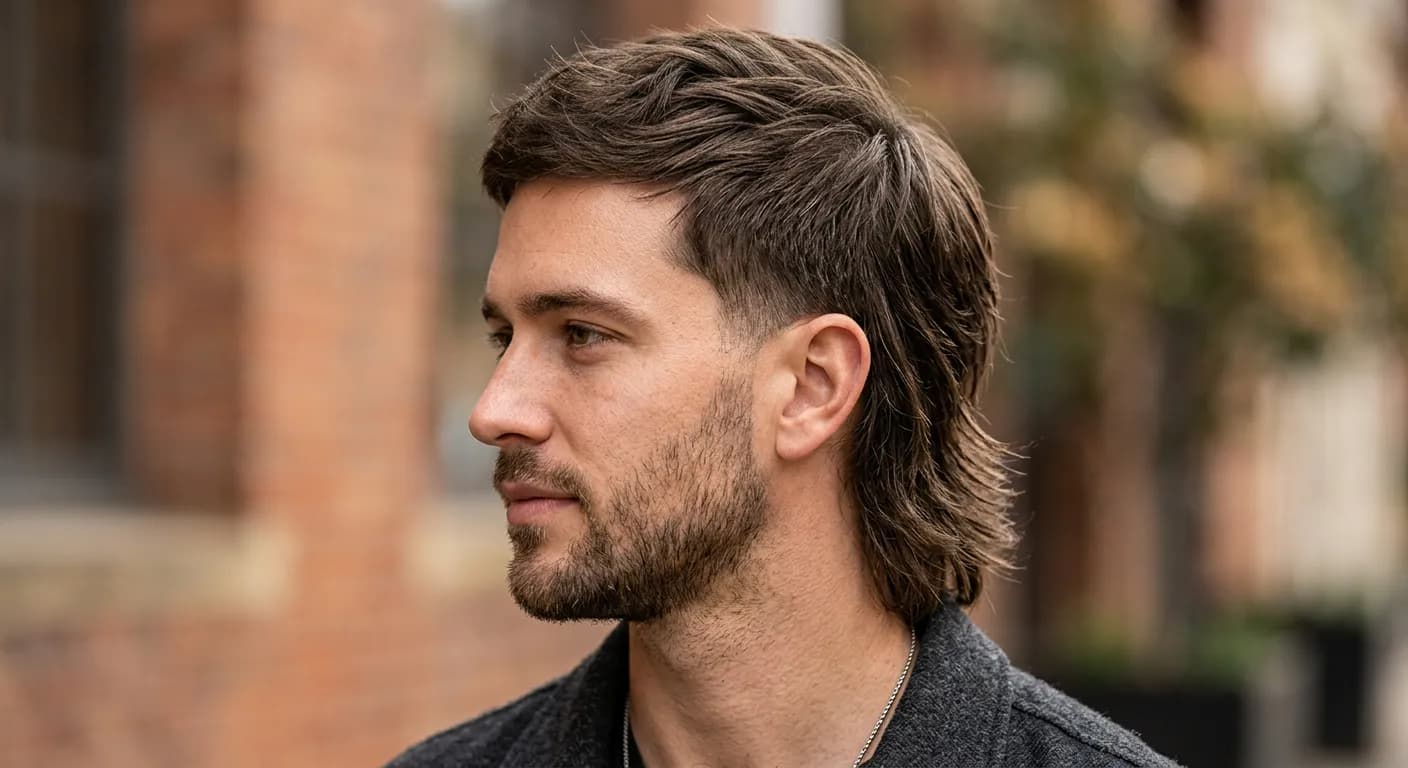
While often used interchangeably with "mullet fade," the fade mullet puts the fading technique front and center. Think of it as a fade-first approach: the entire structure is built around the gradient on the sides, with the mullet length serving as the finishing touch rather than the main event. This version tends to look cleaner and more contemporary, making it a solid pick for anyone who loves the idea of a mullet but wants something that won't raise eyebrows at the office. The sides blend from skin or near-skin up into the crown, and the back length flows naturally from the fade line. It's essentially the most wearable version of the mullet you can get.
How to Talk to Your Barber
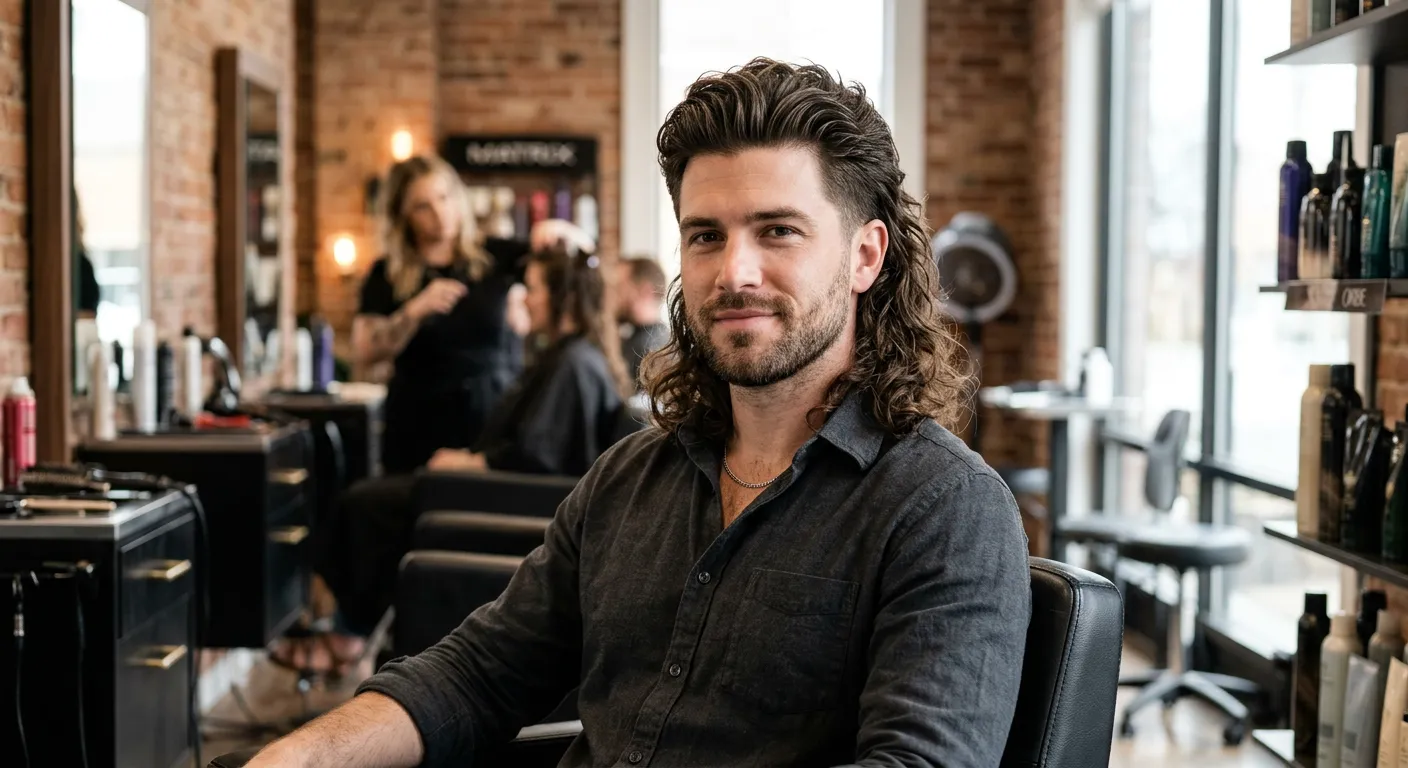
Bring at least three reference photos — front, side, and back views if possible. Tell your barber how long you want the back relative to your collar (touching it, past it, or well above it). Specify whether you want the sides faded, tapered, or simply scissor-cut shorter. Mention your lifestyle: do you want something low-maintenance, or are you willing to style it daily? If it's your first mullet, start conservative — you can always grow the back out longer, but you can't glue hair back on. Ask your barber what they'd recommend for your hair type and face shape, because a good barber will have strong opinions here, and they're usually right.


Styling and Keeping It Fresh
Day-to-day styling depends on the look you're after. For that lived-in, textured vibe, work a sea salt spray or matte clay through towel-dried hair and let it air dry. For a sleeker mullet, blow-dry the top back and away from the face, then use a light-hold pomade to keep everything in place. The back generally takes care of itself — just make sure it's not tangling by using conditioner regularly. Book a maintenance trim every 4 to 6 weeks to keep the shape intact, especially around the sides and the transition zone. If you're rocking a fade mullet, you might need touch-ups every 2 to 3 weeks to keep those sides crisp.